Bibimbap
Ingredients
For the Rice and Toppings:
- 2 cups white rice
- ½ lb beef
- Spinach
- Bean sprouts
- 1 zucchini
- 1 carrot
- Shiitake mushrooms
- 4 eggs
For the Seasoning:
- Gochujang
- Sesame oil
- Sesame seeds
- Salt and pepper
Instructions
Prepare the Rice: Cook the white rice according to package instructions and keep it warm.
Cook the Vegetables: Sauté or blanch the spinach, bean sprouts, zucchini, carrot, and mushrooms with a bit of salt and sesame oil until tender but still vibrant.
Prepare the Beef: Marinate the beef slices in a mixture of soy sauce, sesame oil, garlic, and sugar. Cook in a hot pan until browned and set aside.
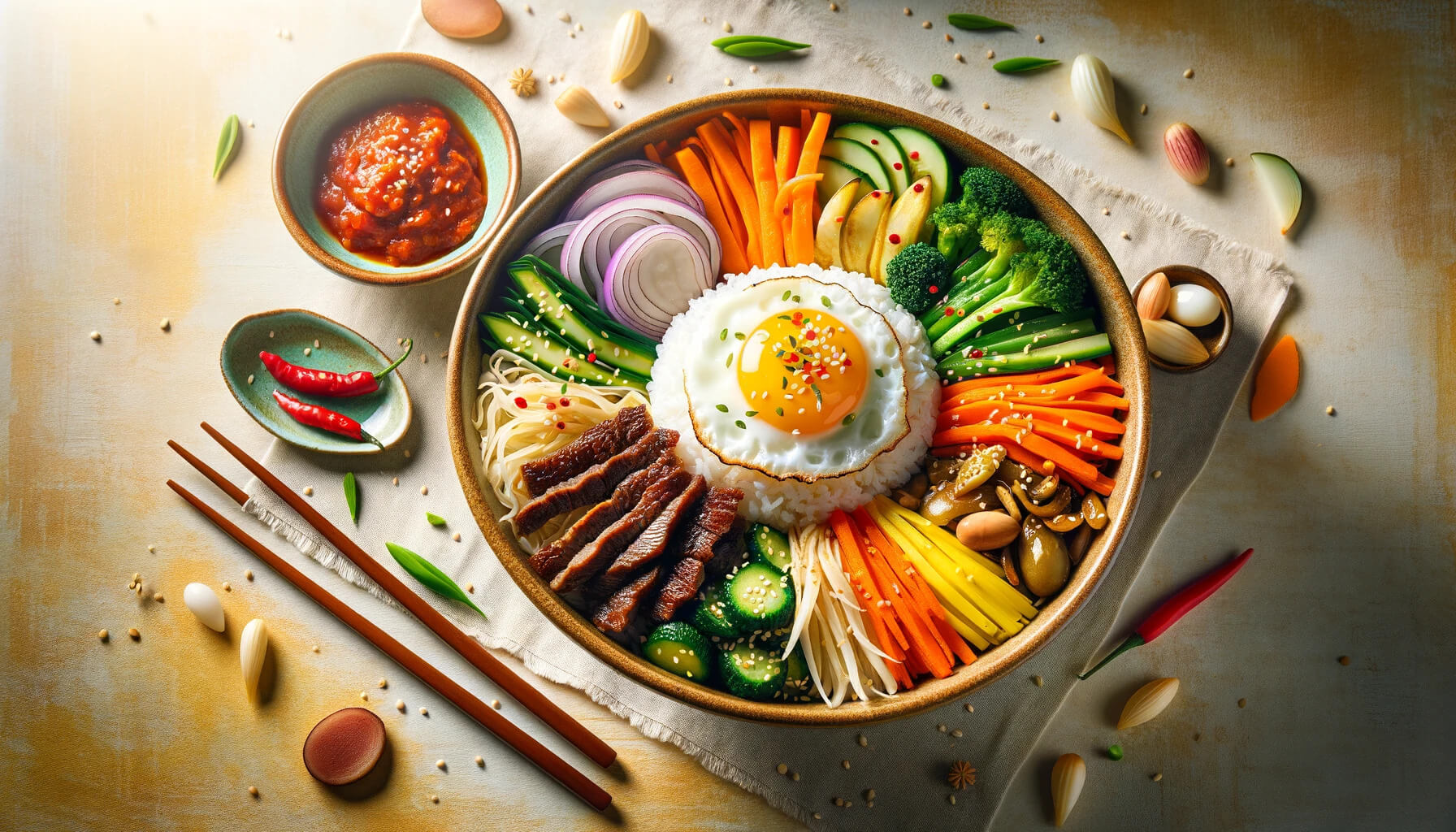
Assemble the Bibimbap: In a bowl, place a serving of warm rice and arrange the cooked vegetables, beef, and a fried egg on top. Add a dollop of gochujang and sprinkle with sesame seeds.
Serve: Before eating, mix all the ingredients together, adding additional sesame oil and gochujang to taste. Enjoy the harmonious blend of flavors and textures in each bite.
A Bowl Built for Mixing
Bibimbap is satisfying because every component has its own job before everything comes together. Warm rice, seasoned vegetables, tender beef, a runny egg, sesame oil, and gochujang all start out as separate colors and textures, then turn into one spicy-savory bowl once you mix them.
That mixing is the point. It is practical, because the sauce and egg coat the rice, but it also gives the dish its personality: crisp vegetables, soft rice, rich yolk, chile heat, and sesame aroma all showing up in the same bite. It works as a weeknight dinner, but it also feels special enough to serve when you want a table full of bowls, toppings, and people customizing their own spice level.
Tips
- Keep the rice warm so the toppings soften slightly when everything is mixed.
- Prepare the vegetables separately if you have time. It gives each topping a cleaner flavor and keeps the colors brighter.
- Gochujang varies in sweetness and heat, so start with a spoonful and add more after mixing.
- A little sesame oil goes a long way. Add enough for aroma, but not so much that it makes the bowl heavy.
- Bibimbap is best assembled right before eating, but the vegetables and beef can be cooked ahead and reheated gently.
Variations
- Make it vegetarian by replacing the beef with tofu, mushrooms, or extra seasoned vegetables.
- Change the vegetables with the season: fresh greens and cucumber in spring or summer, mushrooms and root vegetables in fall, and kimchi or spinach in winter.
- Add more gochujang for heat, or serve it on the side so everyone can adjust their own bowl.
- For extra texture, add toasted seaweed, kimchi, pickled radish, or a sprinkle of extra sesame seeds.
Nutrition Facts
- Serving Size: 1 bowl
- Servings Per Recipe: 4
- Calories: 600
% Daily Value
- Total Fat: 20g (26% DV)
- Saturated Fat: 5g (25% DV)
- Cholesterol: 190mg (63% DV)
- Sodium: 850mg (37% DV)
- Total Carbohydrates: 80g (29% DV)
- Dietary Fiber: 6g (21% DV)
- Total Sugars: 7g
- Protein: 25g
- Vitamin A: 860mcg (96% DV)
- Vitamin C: 35mg (39% DV)
- Calcium: 160mg (12% DV)
- iron: 5mg (28% DV)
Note: The “% Daily Value” (DV) tells you how much a nutrient in a serving of food contributes to a daily diet. 2,000 calories a day is used for general nutrition advice.
Nutrition information is an estimate and will vary based on ingredients and preparation.